 |
 |
 |
 |
 |
 |
||||
The
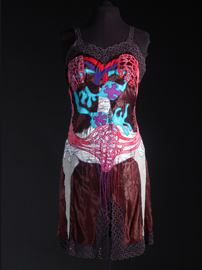
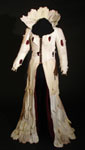
Dream Anatomy series explore these imagined realms inside the body. Because
these garments are meant to be worn, the boundary between the internal
and the external is blurred. The invisible is made visible: wear your inside
on the outside. By using women’s slips and nighties, articles that
were not originally intended for public life, I am playiing with the line
between the public and the private arenas.
Most
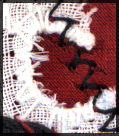
of the garments and fabrics I use come from thrift stores and garage
sales. If you look carefully, you will find stains and worn areas: vestiges
of a previous life. I am fascinated by the emotional patina that accompanies
cast-offs. I choose to recycle worn garments because our bodies also
bear the marks of our daily lives, both externally and internally.

Everybody’s
got a body, but few of us take the time to contemplate what is beneath
the surface of our skin. For centuries, physicians and artists have attempted
to make sense of the complexities hidden inside. Early anatomical illustrations
are often a mixture of correct and incorrect assumptions. Some artists
rely on metaphor rather than verisimilitude.